
Veterinary Call Triage Script for After-Hours Coverage
Veterinary call triage script for clinics: capture emergencies, log PIMS notes, and route humans with an $8,000 one-time owned receptionist.
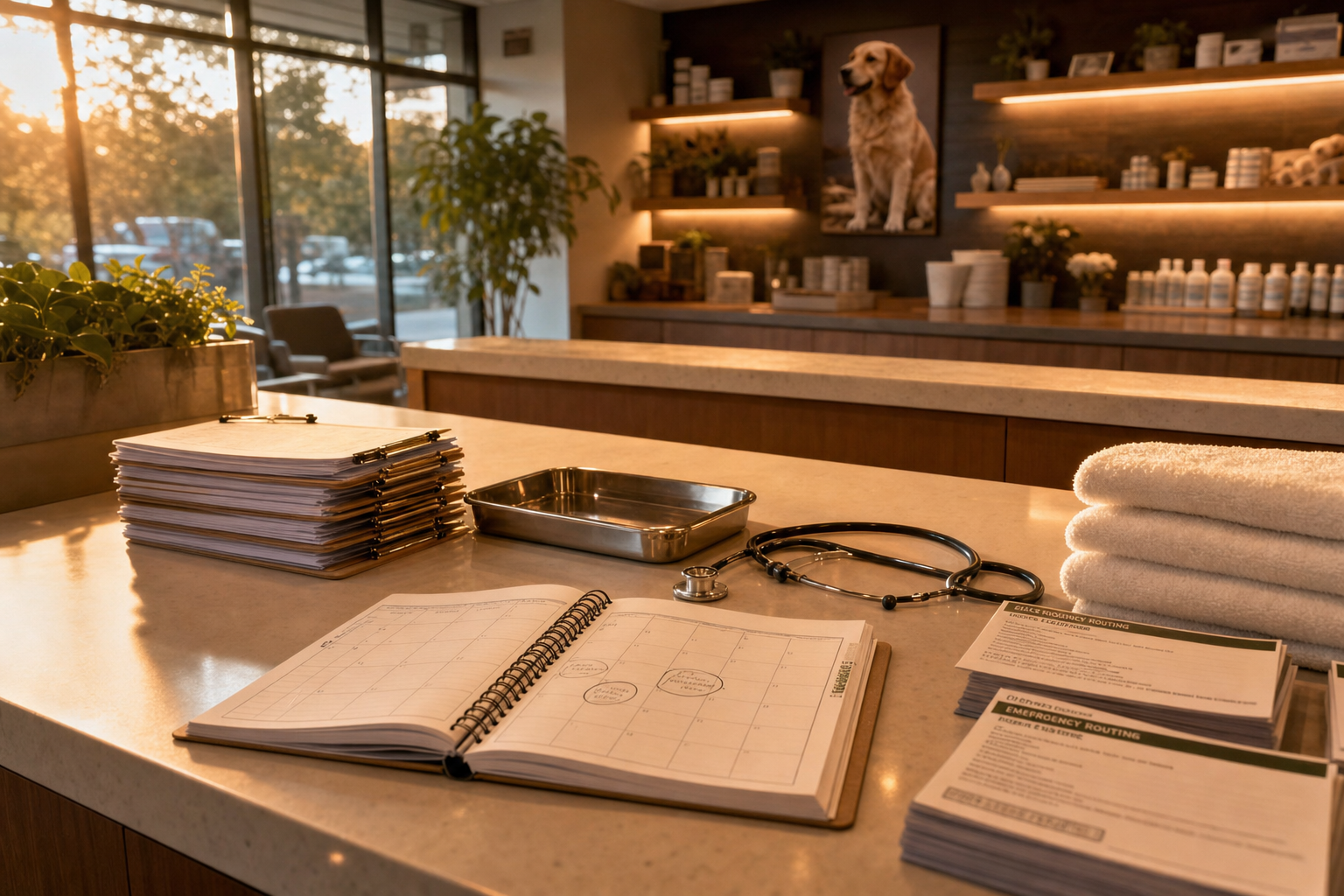
A 10 p.m. veterinary call is rarely a clean booking request. It might be a refill question, a worried owner asking whether vomiting can wait, or a dog that ate medication off the counter.
The script matters because the phone answerer is not practicing medicine. The job is to get facts, write them down cleanly, and route the call to the right human fast.
Short answer: A veterinary call triage script should capture the caller, pet, symptoms, urgency markers, callback number, and clinic relationship, then write that note to the PIMS or a staff queue. The AI receptionist can handle the repeatable intake and routing. Medical judgment, medication approval, and gray-area advice stay with a veterinarian, technician, or emergency hospital.
What should a veterinary call triage script capture first?
A veterinary call triage script should capture identity, contact, pet details, the immediate problem, and red-flag symptoms before anything else. The goal is a useful note that staff can trust, not a long conversation that sounds smart and creates liability.
Here is the first lane I would build:
| Script field | Why it matters | Where it goes |
|---|---|---|
| Caller name and callback number | Staff need a clean return path if the call drops | PIMS note or call log |
| Pet name, species, and age | Urgency changes by animal and life stage | Patient lookup or intake task |
| Current issue in caller’s words | Keeps the record close to what was said | Structured note |
| Red flags | Routes true emergencies fast | Human escalation alert |
| Clinic relationship | Existing client, new client, or referral | CRM/PIMS field |
Red flags should be plain: not breathing, seizure, heavy bleeding, hit by a car, possible toxin exposure, trouble urinating, bloat symptoms, collapse, labor trouble, or severe pain. The agent should route those based on the clinic’s rulebook.
This is why I treat veterinary phone automation as AI lead generation only after safety rules are mapped. A new client call is valuable, but a bad emergency handoff is not worth any booked visit.
What does the workflow map look like?
The workflow is trigger -> AI action -> system of record -> human escalation. If the clinic cannot name all four pieces before launch, I would not deploy yet.
For a veterinary clinic, the map looks like this:
- Trigger: The phone rings after hours, during lunch, while lines are busy, or when staff forward overflow calls.
- AI action: The receptionist answers, identifies the caller and pet, asks the triage script, classifies the call as emergency, same-day sick visit, routine appointment, refill, records question, or general message.
- System of record: The call summary lands in ezyVet, Provet Cloud, AVImark, Cornerstone, Shepherd, a shared Google Sheet, or a front-desk email queue, depending on what the clinic can actually use.
- Human escalation: Emergency terms route to the on-call veterinarian, ER referral path, or practice manager. Unclear calls escalate instead of forcing the AI to decide.
Call +1 (832) 861-0469 right now - the receptionist that answers is the exact deployment I’m describing.
The product surface for this is the AI Receptionist, not a chatbot. Telegram or email can notify the owner, but the receptionist solves the missed-call problem.
Which calls should the script separate?
The script should sort calls into a few operational lanes that staff already understand. Too many categories make the agent brittle; too few categories turn everything into a generic message.
I would start with six:
- Emergency or possible emergency
- Same-day sick visit request
- Routine appointment request
- Prescription refill request
- Records, vaccine, boarding, or grooming paperwork
- General question or callback request
For an emergency, the script should route according to clinic instructions and never offer a diagnosis. For a same-day sick visit, it should capture symptoms and preferred times, then book or queue based on clinic rules. For refills, it should collect medication, dosage if known, pharmacy, and urgency, then route for staff approval.
The existing veterinary answering service guide covers the broader buy-or-build decision. This post is narrower: what the first conversation should collect.
What I would automate first
I would automate after-hours and overflow intake first, then add refill and appointment rules once the staff trusts the notes. The first deployment should remove missed calls without creating clinical risk.
For a small animal clinic, the first version should answer when the front desk cannot. It should not handle every policy, estimate, medication, and medical question on day one.
My practical order:
- After-hours emergency routing
- Overflow call capture during business hours
- Same-day sick visit requests
- Routine appointment booking
- Refill intake
- Records and vaccine form requests
That order keeps the highest-risk calls at the front. It also gives the team a clean feedback loop. After week one, the clinic can tune wording, escalation thresholds, and refill routing from real calls.
For a clinic with no PIMS access, I would still deploy if staff agrees to use a shared sheet or inbox. A clean workaround beats a perfect integration that never ships.
How do you know if the script is working?
A working script makes the morning easier. Staff should see complete notes, fewer voicemails, fewer repeat callers, and a clear list of which calls were routed overnight.
Use this checklist before you trust it:
- Every call has a name, callback number, and pet name.
- Emergency calls show the red flag that triggered escalation.
- Routine calls have the next requested action.
- Refill requests do not promise approval.
- New clients are marked separately from existing clients.
- Staff can find the note in one place without hunting through texts.
- The agent has a clear fallback when the caller asks for medical advice.
The fallback matters. A safe version sounds like: “I can collect this and route it according to the clinic’s instructions, but I cannot give medical advice. If this feels urgent, I can connect you to the emergency path now.”
That is the posture I trust.
When this isn’t the right move yet
Do not deploy a veterinary AI receptionist yet if your escalation path is vague, your staff will not use the notes, or you expect the agent to make clinical decisions. The tool can run a process. It cannot replace judgment.
Wait if nobody owns after-hours escalation. If the agent flags a possible emergency and the alert goes nowhere, you have built a faster voicemail.
Wait if your doctors and technicians disagree on what should route urgently. Write the clinic rulebook first. The AI should follow your decision tree, not invent one.
Wait if your real issue is front-desk chaos during normal hours, or if you want the system to approve refills, advise on symptoms, or talk clients out of urgent care. That is not the build I would ship.
What should the next step be?
If the clinic already misses after-hours or overflow calls, map the first triage lane before buying a tool. The right script will show you which calls AI should capture and which calls still need a person immediately.
For your situation specifically, the deployment shape probably looks closest to the veterinary clinic receptionist page: phone answering, emergency routing, appointment capture, and clean notes back to the staff queue.
If you want me to map it, send the current call flow through the free audit. It is a short form - I reply with your AI replacement map within 24 hours, including the exact calls I would automate, what should stay human, and whether the $8,000 owned receptionist makes sense for your clinic.
FAQ
What should a veterinary call triage script ask first? +
Start with caller name, callback number, pet name, species, the immediate problem, and whether the pet is breathing, bleeding, seizing, unable to walk, or exposed to toxins. The script should capture facts, not diagnose. Anything urgent routes to a human or emergency hospital.
Can an AI receptionist triage veterinary emergency calls? +
Yes, if it is built to classify and route instead of giving medical advice. The AI receptionist can answer 24/7, capture the facts, identify emergency language, write a clean note, and escalate to the on-call path. It should never decide treatment or medication.
How much does an AI receptionist for a veterinary clinic cost? +
My AI Receptionist deployment is $8,000 one time for the call flow, triage rules, PIMS or workaround logging, testing, and handoff. You own the setup after launch. There is no monthly subscription to me, only direct phone and AI usage costs.
Can veterinary call triage write into ezyVet, AVImark, or Cornerstone? +
Sometimes directly, sometimes through a workaround. If the PIMS has usable access, the agent can write a structured note or task. If it is locked down, the triage note can land in a shared sheet, email queue, or task board for staff entry.